Posts

Showing posts with the label Caucasus

Armenia freezes membership in the CSTO. Why, and what does it mean?

Image
  On February 22 nd the prime minister of Armenia, Nikol Pashinyan, announced that Armenia would freeze its membership in the Collective Security Treaty Organization, the Russian-led military alliance. [1] The future of Armenian membership in the alliance is uncertain. The decision to freeze Armenian membership comes in the wake of increased Azerbaijani pressure, improved Armenia-NATO relations, and a significant deterioration of Armenian-Russian relations. The Armenian threat of Azeri aggression has not ended with the Nagorno-Karabakh conflict having ended in an Azerbaijani victory. Azerbaijan has not given up on the Zangezur corridor concept, which would link the Azeri Nakchivan exclave to the rest of Azerbaijan. Azerbaijani prime minister Heydar Aliyev also often speaks of Armenian lands as “west Azerbaijan”, and that he hopes for a settlement where “west Azerbaijanis” can move home (which would then be into Armenia). [2] Pashinyan is keenly aware of the implicit threat in ...
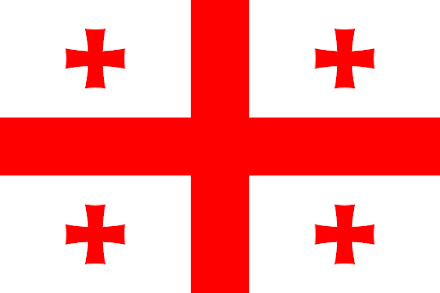
A study of the failures of Russian foreign policy in Georgia

Image
  A study of the failures of Russian foreign policy in Georgia The history of Georgia since independence can serve as a demonstration of every Russian method of exercising power in the Near Abroad. [1] Georgia has been a victim of Russian-backed separatism, misinformation campaigns, invasion, and partial occupation. Despite this, Georgia proper has remained outside of the Russian sphere. This serves as the first puzzle of modern Georgia: why have all Russian methods of influence exertion failed, while countries have stayed in the Russian sphere with far less meddling from Russia? It is easy to divide Georgia since independence into two periods, one before the Rose Revolution in late 2003 and one after. The Russian view of the Rose Revolution is as a pro-western foreign-planned coup. [2] This misses a very important point, which is that Georgia was not particularly pro-Russian on the eve of the revolution in 2003, and therefore Russian foreign policy in Georgia must have failed ...

Artsakh is gone. What now?

Image
  With the new year comes a change in the map that straddles the line between a de facto and a de jure development. As of January 1st, 2024, the Republic of Artsakh no longer exists, ending its 32-year history as an independent yet unrecognized state. The republic controlled most of the Nagorno-Karabakh region, and until 2020 also other territories internationally recognized as part of Azerbaijan. On the 19 th of September 2023 Azerbaijani military forces moved into the territory of Artsakh from multiple directions [1] . Fears of a third Nagorno-Karabakh war were halted by the surrender of the military of Artsakh the following day. With no support from the weakened Armenia and no hope of intervention by any great power, the government of Artsakh had no means to continue the fight alone. The surrendered government promised to dissolve Artsakh in January 2024 [2] . Artsakh’s dissolution marks the end of the Nagorno-Karabakh dispute, but it may not end the Armenia-Azerbaijan conf...

The Armenia Azerbaijan conflict

Image
  First Nagorno Karabakh war In 1988, prior to the fall of the USSR, ethnically inspired riots started breaking out in the South Caucasus between Azeris and Armenians, especially in the region of Nagorno-Karabakh. Soviet leadership, looking elsewhere, was incapable of hindering the soaring violence. The Nagorno Karabakh Autonomous Soviet Socialist Republic had been legally part of the Azerbaijan SSR, so when the Union was broken, Nagorno Karabakh, despite being populated by a majority of Armenians, was considered to be legally a part of Azerbaijan. At the end of 1991 Nagorno Karabakh was declared the independent and Armenian led Republic of Artsakh by its people, but it did not receive any diplomatic recognition, including by Armenia. The young republic of Azerbaijan was outraged, and did not intend to allow a breakaway state from forming. Nagorno Karabakh here shown in a brighter shade of yellow than the rest of Azerbaijan (image source wikimedia) The ethnic and political conf...